How to Create a Patient-Ready Protocol Without a Staff of Researchers
Small integrative practices can't afford hours of after-hours research per patient. Here's how to build evidence-based, personalized protocols that patients can actually follow -- without a full research team behind you.
Integrative clinicians running small practices quickly realize how much time patient-specific protocol work can take. Patient visits may be brief, but reviewing medications, supplements, labs, lifestyle factors, and evidence can take up entire evenings after clinic hours. Modern patients expect more than generic wellness advice. They expect a personalized, evidence-informed protocol that reflects their medications, supplements, lifestyle, and health goals.
But how can integrative clinicians build this kind of patient-ready protocol without a full research team? Here is how clinicians can create evidence-based, patient-ready protocols faster -- without hours of manual research.
The Reality of Evidence-Based Functional Medicine Workflows
As functional and integrative medicine becomes more mainstream, data-driven, protocol-based care is becoming the standard. This means each recommendation needs to be evidence-based, personalized, and connected to the patient's medications, labs, symptoms, and lifestyle.
Larger organizations may have the infrastructure to support this: research review teams, safety checkers, and dedicated protocol developers. They can review new research, assess supplement safety, check interactions, and update clinical recommendations in a structured way.
In a small clinic, much of this analytical work often falls to one person. Solo practitioners have to balance patient visits, protocol creation, follow-up, and after-hours research. When protocol work takes too much time, patient education and follow-up suffer. Clinicians need fast access to reliable, filtered evidence so they can create safe, personalized protocols without getting buried in manual research.
Why Traditional Research Workflows Don't Fit Everyday Practice
Academic research protocols are designed for controlled studies: strict eligibility criteria, formal consent processes, and methodical timelines. That rigor serves a purpose, but it was never built for the pace of clinical care.
The gap becomes costly in practice. When clinicians are translating complex research findings into patient protocols without fast access to filtered, contextualized evidence, things slip. Supplement interactions get missed. Contraindications go unchecked. Drug-nutrient depletions fall through the cracks. Protocols become generic, dosing gets disconnected from the patient's actual presentation, and patients notice.
Small integrative practices cannot afford that erosion of trust. They need evidence that is already vetted, contextualized, and ready to apply.
Designing a Protocol That Supports Real Adherence
To develop an effective patient protocol, it is not enough to collect studies from PubMed or general web searches. Clinicians need to turn evidence, dosing, safety checks, and lifestyle recommendations into a clear plan patients can actually follow.
In practice, long-term adherence and patient retention directly depend on how easy information is to understand. If a protocol is written in confusing terms, patients may give up after just a few days simply because they do not understand the logic behind it.
For a protocol to become a practical tool for recovery and improvement, it should include several key elements:
- Plain-language explanations of each recommendation
- A clear supplement schedule with dosing, timing, and meal instructions
- Simple follow-up tools to monitor patient progress
- Built-in flexibility to adjust recommendations based on response, tolerance, or safety concerns
When the plan fits into a patient's real life, they are more likely to stick with it. That means better adherence, more trust, and fewer barriers to following the protocol. It also makes progress tracking easier, even through telemedicine.
How ClarityTx Helps Build Evidence-Based Protocols
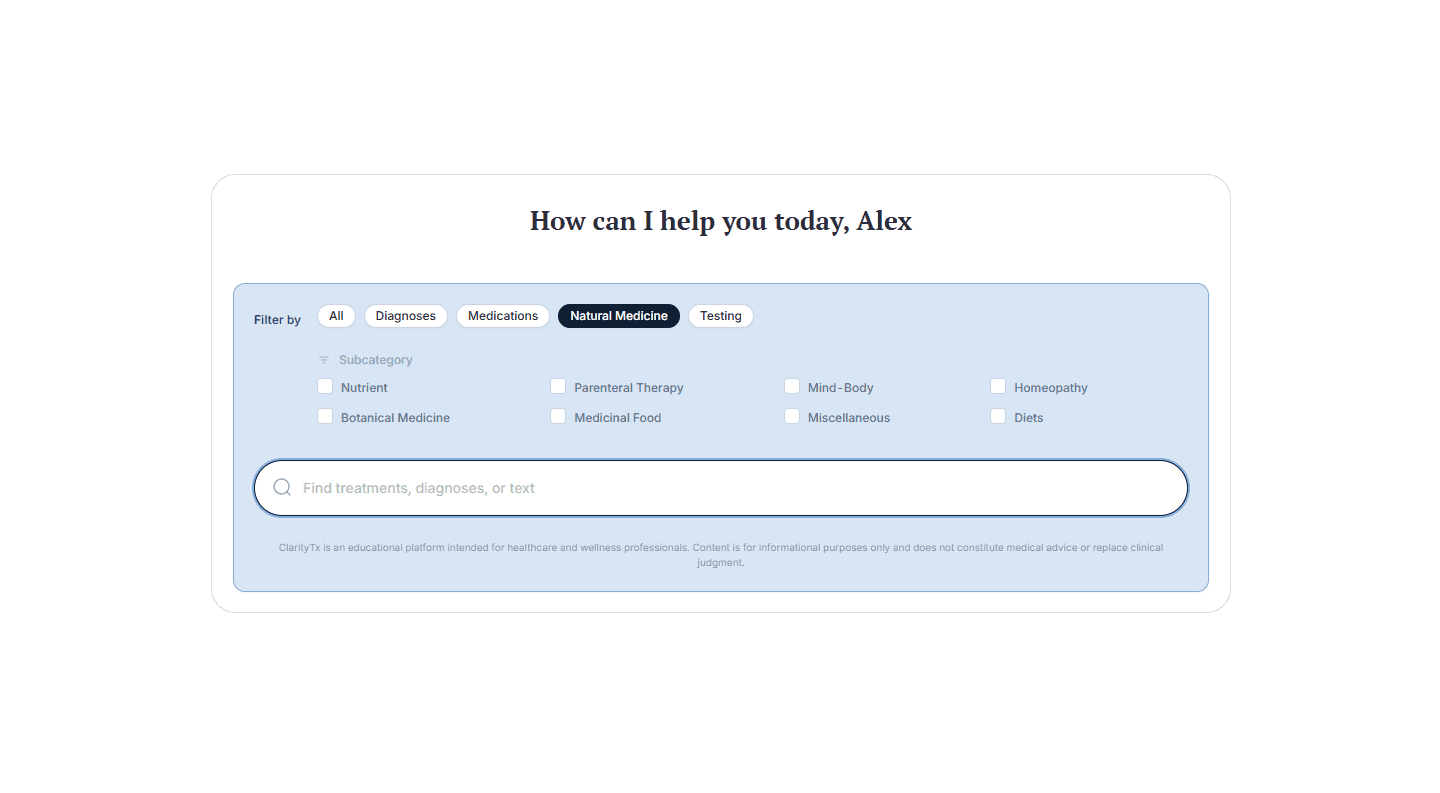
ClarityTx helps integrative clinicians build evidence-based, patient-ready protocols faster. It supports the clinical workflow with evidence review, safety checks, dosing guidance, and protocol generation -- so clinicians do not have to start from a blank page or spend weekends building plans from scratch.
The platform cuts down manual research by organizing evidence, flagging interactions, and supporting protocol documentation. Clinicians describe a patient case in plain language and receive a structured, interaction-checked protocol in under eight minutes. Every recommendation carries an evidence grade from A to D with links to the source material.
Clinician experience is combined with AI-assisted evidence review, and protocol creation becomes easier to manage. Clinicians can create structured protocols more quickly and clearly -- and they are easier to explain to patients. The output is a starting point. Clinicians review, edit, and personalize before anything reaches the patient.
ClarityTx also generates a patient-facing version of the protocol in plain language, with clear instructions on dosing, timing, and the reasoning behind each recommendation. For small clinics managing full schedules, this removes the reformatting step entirely.
The result is less time on paperwork and searching for clinical information, and more time for patient care -- which is what integrative practice was supposed to be about in the first place.
Put this into practice with ClarityTx
Protocol Copilot synthesizes evidence across 1,500,000+ studies — drug-nutrient interactions, botanical evidence grades, personalized protocols — in under 2 minutes.
Build your first protocol freeElevate Your Practice: Simplify Workflow & Strengthen Patient Care
- Create personalized, evidence-based protocols faster and smarter, freeing you to focus on what matters most: your patients.
- Save hours of research time daily by accessing thousands of research articles and peer-reviewed medical journals in one centralized database.
- Ensure safer, more effective patient outcomes with consistently updated, reliable information at your fingertips.